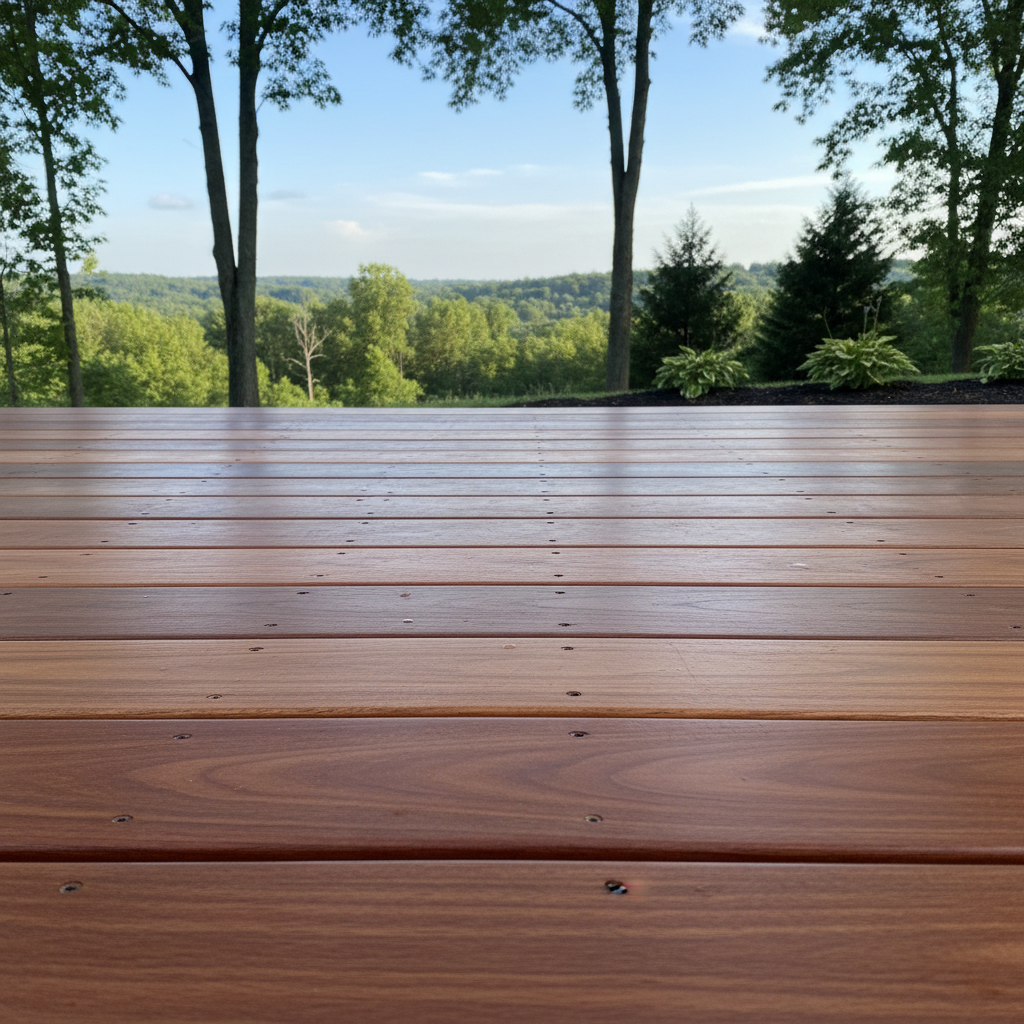
Before You Start: Planning Your Elizabeth Deck Project
So, you're dreaming of a new wooden deck, or maybe giving your existing one a facelift. Good for you! A deck adds a ton of enjoyment and value to your home, especially with our beautiful Indiana summers. But before you grab a hammer or even start sketching, there are a few things you absolutely need to nail down.
First off, permits. Don't skip this. I've seen folks in Elizabeth try to cut corners, and it always bites them later. The Harrison County Planning & Zoning office can tell you exactly what you need. It's not just about avoiding fines; it's about safety and making sure your deck is built to code. Nobody wants a wobbly deck, especially not when you've got friends and family over.
Next, think about your design. What do you want to use it for? Just a small grilling spot? A big entertaining area? Consider your yard's layout, sun exposure, and how it flows from your house. And for us here in Elizabeth, especially if you're up on one of those hills overlooking the river, you've got to factor in wind and drainage. You don't want water pooling under your deck or a design that catches every gust of wind like a sail.
Material choice is big. For wooden decks, you're usually looking at pressure-treated pine, cedar, or redwood. Pressure-treated is the most common and budget-friendly around here, but it needs regular maintenance. Cedar and redwood look fantastic and are naturally more resistant to rot and insects, but they cost more. Composite decking is another option, but we're talking wood today, so let's stick to that.
What can you DIY here? Sketching out ideas, measuring your space, and even calling the county for permit info – that's all you. If you're handy with tools and have a good understanding of construction, you might even tackle a simple design. But if it involves complex footings, ledger boards attached to your house, or multi-level designs, I'd seriously consider calling a pro. Getting the foundation wrong can ruin everything.
During the Build: DIY vs. Professional Help
Alright, plans are approved, materials are ordered. Now for the fun part, or the headache, depending on your skill level. Building a deck isn't just about nailing boards together. It's structural engineering on a small scale.
Footings are critical. They need to be dug to the right depth (below the frost line, which is usually 30-36 inches around here to prevent heaving), properly sized, and poured correctly. If you've never done concrete work, this is a prime spot to mess up. A bad footing means a sagging, unsafe deck down the line. I've seen too many DIY decks with footings that weren't deep enough, and after a few winters, they start to look like a roller coaster.
Framing is another area where precision matters. Joists need to be spaced correctly, ledger boards properly flashed and bolted to your house's rim joist, and all connections need the right hardware. Skimping on fasteners or using the wrong type for treated lumber can lead to rust and structural failure. If you're not confident in your ability to cut straight, measure precisely, and understand load-bearing principles, this is where a professional really earns their keep.
Decking and railings? This is where a lot of homeowners can jump in. Laying deck boards, especially if you're going with a simple pattern, is totally doable for many. Just make sure you're gapping them correctly for drainage and expansion. Railings, especially code-compliant ones, can get tricky. Spindle spacing, height requirements, and sturdy newel posts are all non-negotiable for safety. If you're building a simple, ground-level platform deck, you might be able to handle most of it yourself. But for anything elevated, especially with stairs, Elite Deck Solutions can ensure it's built right and safe.
After It's Built: Maintenance and Longevity
So, your beautiful new deck is done. Congratulations! Now, you've got to take care of it if you want it to last. This is where the DIY really kicks in for everyone.
Cleaning is step one. You'll want to clean your deck annually, usually in the spring. A good deck cleaner and a stiff brush, or even a pressure washer (used carefully on a low setting, otherwise you'll damage the wood fibers), will get rid of grime, mildew, and algae. Don't let that stuff sit; it eats away at your wood.
Sealing or staining is next. This is crucial for wooden decks. It protects the wood from UV rays, moisture, and rot. Depending on the product, you'll need to do this every 1-3 years. If you're using a transparent sealer, you might need to reapply more often than a semi-transparent stain. I always tell folks to watch for water beading up on the surface. If it soaks in, it's time to reapply. This is definitely a homeowner job, and it makes a huge difference in your deck's lifespan.
Regular inspections are also a must. Walk around your deck a few times a year. Look for loose boards, wobbly railings, popped nails or screws, and any signs of rot, especially where wood meets concrete or other wood. Check your ledger board connection to the house. If you catch small problems early, they're usually easy fixes. A loose board? Just screw it down. A wobbly railing? Tighten the bolts. But if you see significant rot, widespread structural issues, or major cracking, that's when you call in a professional. Sometimes a repair is all you need; other times, it's a sign it's time for a bigger overhaul.
Taking care of your deck isn't hard, but it does require consistency. Do these things, and your wooden deck will be a great spot for family gatherings and quiet evenings for years to come.