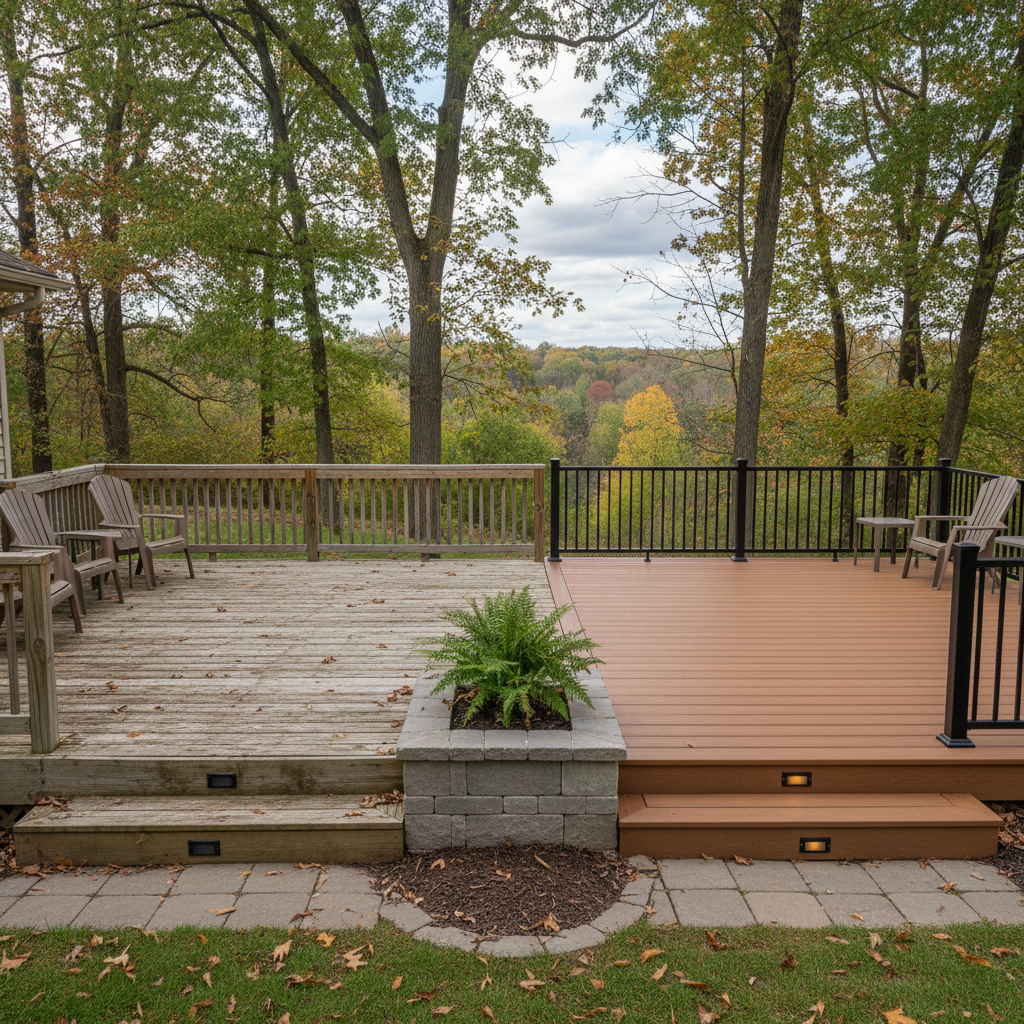
Alright, let's talk Trex. You're looking at composite decking, which is smart. It's a great alternative to wood, especially with our humid summers and freezing winters here in Elizabeth. But not all Trex is created equal, and you've really got two main types to consider: capped and uncapped. What's the difference, and which one makes more sense for your backyard?
The Old Guard: Uncapped Trex
First up, uncapped. This is the original composite decking. It's basically a mix of wood fibers and recycled plastic. When Trex first came out, this was it. It was a huge step up from wood in terms of not rotting or needing constant staining. But it had its quirks.
- Appearance: It looked pretty good when new, but over time, it could fade. The colors weren't as vibrant or as consistent as what you see today. Think more muted, earthy tones.
- Durability: It's tough against rot and insects, no doubt. But because the wood fibers were exposed on the surface, it could still absorb some moisture. This meant it was more prone to staining from things like spilled wine or grease from the grill. Mold and mildew could also get a foothold on the surface if you weren't diligent with cleaning.
- Maintenance: Less than wood, for sure. You didn't have to stain or seal it. But you did need to clean it regularly, and sometimes aggressively, to keep mold and stains at bay. Pressure washing was often necessary, and you had to be careful not to damage the surface.
- Cost: Generally, uncapped Trex is the more budget-friendly option. It's less expensive per linear foot than its capped counterpart.
The New Standard: Capped Trex
Now, this is where Trex really stepped up its game. Capped composite decking, which is what most people mean when they say